poem

Strange

megfallon2

Little Meg Fallon is a beautiful one
only when compared to none.

An airy look about her face,
a different kind of inhuman grace.

She is quiet and alone all of her days,
unable to navigate the social maze.

Instructors find her strange to teach,
a quicksilver mind they just can’t reach.

But little Meg knows deep in her heart
lessons worth learning require an art;

a stillness of soul at which she excels;
a talent for reading natural spells.

Education came in a secret way,
while in a snow-bound wood one day.

The exquisite drifting of the flakes that fell
imparted a knowledge she never will tell.

Such patterns she saw by sitting so still
will never be transferred to paper by quill.

The teachings of books and lectures dry
cannot touch what is taught by watching the sky.

An instructor as vast as the atmosphere,
open to children with the talent to hear.

So little Meg reads what nature has written
and smiles to herself like a satisfied kitten.

A mind full of magic she cannot share;
such children of mystery need special care.
megfallon

Standard
writing

Fear of Success

success3

I used to scoff at the concept. But lately I’ve been thinking about it a lot.

Once upon a time I worked in New York. At CBS. At Joseph Papp’s Public Theatre, aka, The New York Shakespeare Festival. At New York City Ballet. At a host of other venues with innumerable other denizens of the entertainment industry. Among the hundreds of people with whom I had contact, two performers stood out. One was a struggling comedian. The other a struggling actor.

Both were tall, dark, handsome men. Both were talented. Both had that depth and grace of soul that merits the label ‘genuinely nice guy.’ Today, the comedian lives in Atlanta, working as a headhunter for technology corporations.

He didn’t ‘make it.’ A couple of weeks ago I asked him why. A thoughtful silence ensued. But then, with the perspective of years… “I didn’t know how to market myself. It wasn’t enough to want it, or to be good at it. I needed to be a business man, too. I just wasn’t.”

Who knew when or if we’d talk again, so I took the plunge with what I considered much more important questions. “Are you sorry?”

“I wonder about it sometimes; what life would be like if I’d kept at it.”

And then the biggest question of all. “Are you happy?”

Not much hesitation this time. “Yeah, I’m happy. The way things turned out? I’ll take it.”

The actor, on the other hand, is by industry definitions, successful. He has television and movie credits under his belt. He’s climbed higher than he ever expected. He supports himself and his family solely by practicing his craft. In a strange quirk of fate, I found myself going over the same ground with him a short time ago.

“I don’t know why I made it.” His voice was low and contemplative. “I know I’ve been lucky. Maybe I was hungrier for it than the others? I needed it. Not sure…”

“But you’re happy, right?”

A longer pause than I expected from such an overtly ‘successful’ man.

“Sometimes. Not always.”

Maybe it’s because I’ve been contemplating success and its attendant obstacles. Maybe it’s because I have recently touched bases with those two very similar, yet extraordinarily divergent men. But now I watch others who are caught up in the throes of having their work acknowledged, and I see them discovering how different the journey is from what they dreamed and expected. I wonder even more. Does Fear of Success stem from an innate desire to sabotage ourselves, or is there something inherently scary about achieving it?

Why is success frightening? Why do we think we want it, if it is? Is it that any change, even when it’s what we’ve been striving to attain, is scary? Or are we afraid of finding ourselves trapped in a situation in which we feel obligated to remain, because everyone else thinks we’d be crazy to abandon it?

Answers are as numerous and varied as the situations and people involved.

As for me, I’m still struggling to reach that golden pinnacle where the air must surely be sweeter. But what if it’s so rarefied that breathing is impossible? I guess I’ll never know until I get there. In the meantime, I keep wondering.

It’s kind of scary…
success2

Standard
books

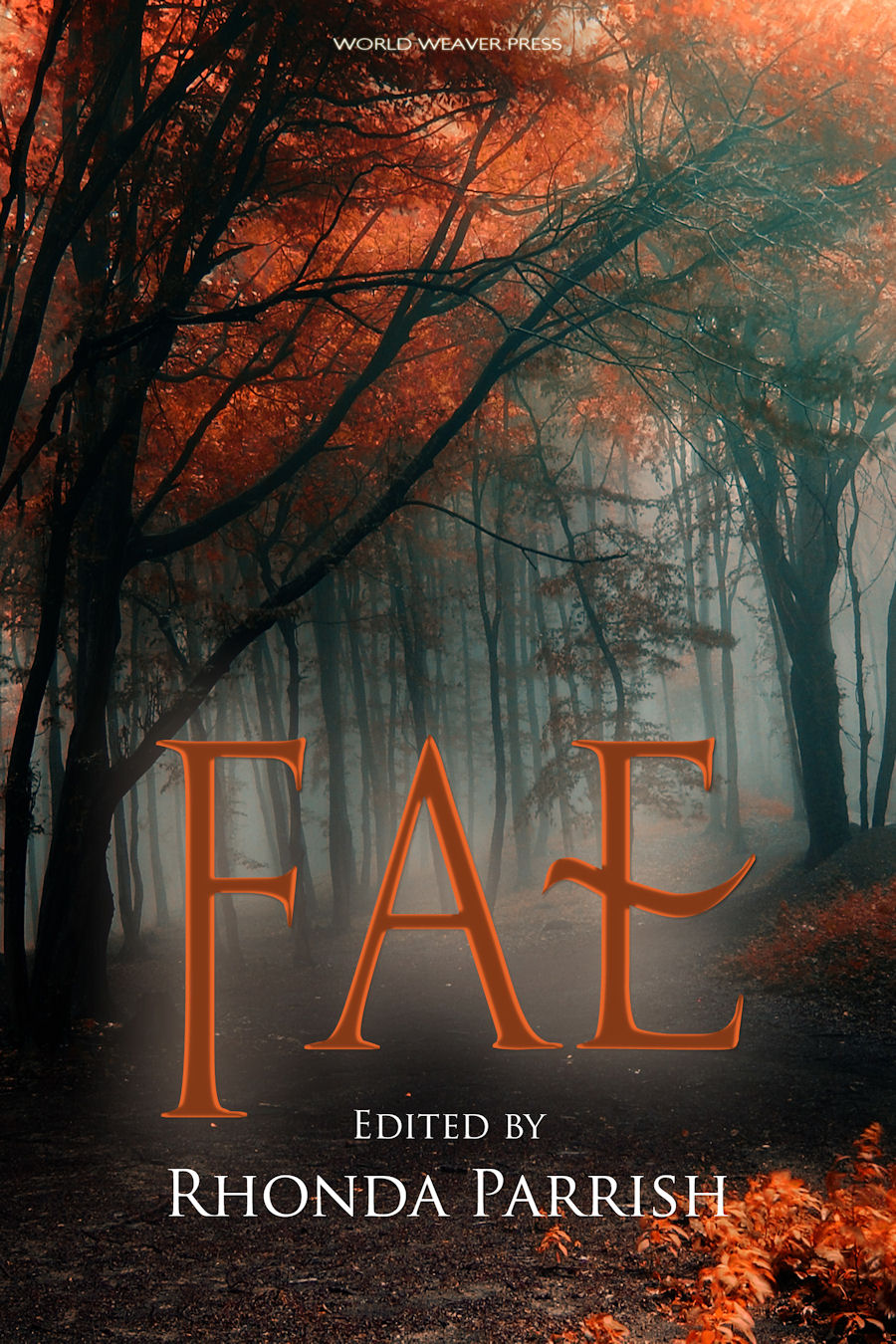
Fae Anthology Cover Reveal

Image

Fairies have been both mischievous and malignant throughout history. They’ve dwelt in forests, collected teeth or crafted shoes. Fae is full of stories that honor that rich history while exploring new and interesting takes on the fair folk from castles to computer technologies and modern midwifing; from the Old World to present day Indianapolis.

Enjoy the familiar feeling of a good old-fashioned fairy tale tinged with urban fantasy, and horror with a fae twist.

Follow the link…step into the fairy ring, if you dare…for a chance to win a copy of Fae.

https://www.goodreads.com/giveaway/show/92441-fae

Edited by Rhonda Parrish

Release date: July 22, 2014 (ebook and paperback)


Standard
poem

The Drive Home

greenwaterfalling

She walks along the brink,
a land of moon-washed stones
and white-lipped currents.
Whispers hang over the water.
She inhales their damp,
dark call.

This late, only one car passes.

She is framed in his rearview mirror,
for a moment
at the edge.
Odd, he thinks, that someone
is there.
On the cliff.
So late.

He spares another glance.
The mirror reflects her absence.
But it’s late,
and dark,
and he doesn’t think
she’ll mind
if someone else finds
the body.

Standard
books

A is for Apocalypse Cover Reveal

Image

How do you think the world will end? Worth worrying about?

I’ve long said that worry is the misuse of imagination. Here’s what proves me wrong: a collection of stories that turns dread into art, springing from the imaginations of 26 talented writers.

These select writers are being assigned letters of the alphabet, then given complete artistic freedom within a chosen theme. We begin at the beginning…a very good place to start…

 A is for Apocalypse

 A is for Apocalypse contains twenty-six apocalyptic stories written by both well-known and up-and-coming writers. Monsters, meteors, floods, war–the causes of the apocalypses in these tales are as varied as the stories themselves.

But don’t take my word for it. Here’s what others have to say:

“In A is for Apocalypse, the world ends in both fire and ice–and by asteroid, flood, virus, symphony, immortality, the hands of our vampire overlords, and crowdfunding. A stellar group of authors explores over two dozen of the bangs and whispers that might someday take us all out. Often bleak, sometimes hopeful, always thoughtful, if A is for Apocalypse is as prescient as it is entertaining, we’re in for quite a ride.” – Amanda C. Davis, author of The Lair of the Twelve Princesses

“Editor Rhonda Parrish gives us apocalyptic fiction at its finest. There’s not a whimper to be heard amongst these twenty-six End of the World stories. A wonderful collection.” -Deborah Walker, Nature Futures author.

Intrigued? Then get on the mailing list below for info as the launch, the apocalypse, approaches.

Win a free copy! Go to editor Rhonda Parrish’s blog and enter to win an ARC copy of A is for Apocalypse!

A is for Apocalypse
Edited by Rhonda Parrish
Poise and Pen Publishing
ISBN-13: 978-0993699016
ISBN-10: 0993699014
Cover Designed by Jonathan Parrish

Links:

Editor: http://www.rhondaparrish.com
A is for Apocalypse on Goodreads: https://www.goodreads.com/book/show/21944844-a-is-for-apocalypse
A is for Apocalypse Mailing List: http://eepurl.com/TzDN9

Standard
poem

Sparrows Fall

sparrows


No one saw the sparrows fall
or noticed when they ceased to call.
For weeks their flinty beaks were still,
unable to announce the kill.

At night a wanderer fleeting past
saw the feathers in the grass,
felt the first foreboding chill
at tiny corpses on a hill.

Stumbled back when at his feet
bony wings began to beat.
Launched into the moonless sky
a flock of things that would not die.

So have a care when sparrows fall;
they may not be true birds at all,
only husks of restive dead
who fly a darker path instead.

Standard
writing

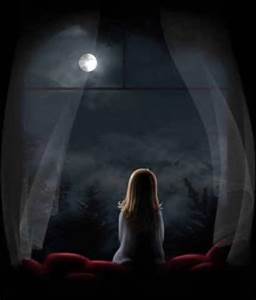
A View From My Window

A View From My Window

On many levels, this is the writing process to me.
It’s bending over a keyboard, lost in your own little world, only to raise your head and see the marvelous things you’re missing.
It’s knowing you’d still choose to return to the places of your imagination even when confronted with such stormy beauty.
It’s a choice, every one of which carries its own rewards and regrets.
It’s knowing there’s an end to every struggle; a light at the end of every tunnel.
Unless it dead ends.
In which case, it wasn’t a tunnel at all. It was a cave.
So you find the safety of concealment, rather than light.
It’s all in how you look at it…

Standard
poem

Dream Lover

nightmarelover

Sleep is such a risky thing
knowing what the night may bring.
What visitations may come
before the rising of the sun.

What creature’s lidless eyes may peer
from ravaged face that once was dear.
What fetid draft may mist your cheek
redolent with graveyard reek.

Whose scrabbling fingers, jointed bone,
struggle for purchase on your own.
The twilight grin and tender touch
once adored, now missed so much.

But not the one from your mind’s eye
this fragment left when he did die,
beckoning with fleshless arms,
hungry for your mortal charms.

Leaching color from your skin,
a lipless kiss, a rictus grin.
Soundless whispers in your mind
trap you in this fevered time.

In sleep is when he comes to hold
a body free of coffin-mold,
when lust survives the fleshly state,
when bones and dust still wish to mate.

Standard
writing

Down the Rabbit Hole: Embracing the Slow Edit

You did it! You did it!

You pulled the story out of yourself for however many weeks, months, or years it took, and now it stretches before you in its entirety. No longer confined to the imaginative terrain between the walls of your skull; rather, a new-formed entity ready to suck air into its lungs and squall forth a noise that will attract readers to its existence, enticing them to be amazed.

But…no.

Not yet.

You know it needs a little more work.

So you do what you consider ‘editing.’ You kick the typos to the curb and smooth the rough spots so no one will stumble over them. It’s a quick, triumphant jaunt through your creation, reinforcing your belief in its value, fanning to feverish pitch your eager anticipation of a glorious reception by agents.

But just as your mind is ready to break free and begin considering the perfect accompanying query, you realize there’s something else out there. You can hear it approaching, crashing its way through bracken and furze. It’s trudging toward you with the geriatric gait of an arthritic sloth. It’s so close you can feel it sapping all that energy geared toward spewing your manuscript out into agent-world.

It’s here.

It’s the Slow Edit.

You could evade it. It is possible to dodge its plodding presence and speed off into the distance. But the little, niggling voice that never lies tells you if you do, you’ll be speeding off all by your lonesome, ending up in that wasteland where agents never go.

They will know if you haven’t honored the Slow Edit, bending your knee and lowering your head before its ponderous girth.

Just do it.

Put on the brakes.

Settle in for the long haul and…

…before you know it, you’ll be down the rabbit hole.

You will study each word, each sentence. You will debate syntax, placement, order. Your brain will delve into a lifetime’s accumulation of vocabulary, searching for just the right nuance, savor, syllable. It will take multiple sessions to wade through your story, because your brain will be overwhelmed after several hours of unremitting effort. It will offer up optional wording with thesauric profusion, making it impossible to identify the best choice. It will begin to invent words like ‘thesauric.’

You’ll have to take a break, regroup, and tackle the beast when your literary awareness has regained its elasticity. Again. And again.

But in the end you’ll have a tale that doesn’t splay itself out before the reader, offering up its entrails in the hope that someone will find it salvageable. You’ll have a streamlined bullet-to-the-brain, can’t-stop-reading-it work.

Thanks to that ugly, paunchy, unwelcome creature. The Slow Edit.

All done? Feel better? Recognize the worth? Glad you did it?

Good.

Now, go back to the beginning and do it again.

Image

Standard
poem

Kayla

Image

Kayla never understood
the dangers lurking in the wood.
Never did set any store
by lurid tales and grim folklore.

Didn’t know why the scare
others felt wasn’t there.
Truth be told, she felt a thrill
while others suffered morbid chill.

Dusk would find her forest-bound,
following each nightly sound.
Any shrieks or moans she heard
she’d believe nocturnal bird,

sure that under starlit sky
prowling perils passed her by.
Kayla never reasoned why
she was not afraid to die.

One night she found a meadow green,
where ancient gravestones carved a scene
of leaning, broken, granite teeth.
Wondered what lay underneath.

Trailing fingers ‘cross the moss
she uncovered what was lost.
“Here lies our child, loved but gone.
Sweet Kayla waits eternal dawn.”

Hands to face, bones she felt
poking through as flesh did melt.
Looking down, no gown on her,
a tattered shroud the breeze did stir.

Kayla’s cries fell into dreams,
waking parents with children’s screams.
Back along the trail she flew,
headed for the home she knew.

But doors stay barred against the ghosts,
wandering souls, and hellish hosts.
So huddled on the window sill,
Famished Kayla is waiting still.

Standard