writing

Secrets

diarycover

I had a diary when I was a little girl.

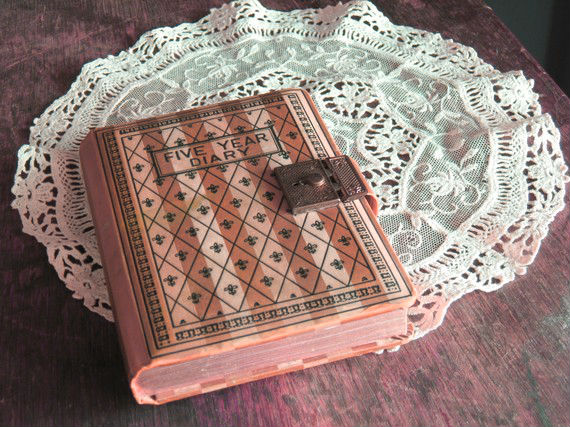
It was a birthday present. It was pink with tiny gold fleur-de-lis marching across its leather cover in regimented rows that reminded me of button-tufting. Or ants. It had a tiny, gold lock. That could only be opened by a tinier, gold key. So that my deepest secrets might remain sacrosanct. So no one might read the horrors of which a twelve-year-old is capable.

Theft. Spiriting my big sister’s lipstick away so I could pretend I was as glamorous as she. Walking off shamelessly with the last blueberry crepe…and denying it later.

Lying. Oh, so many. From the aforementioned crepe caper, to saying school was okay when I detested its stultifying boredom and bullies, to claiming I didn’t mind that we moved so often I would never really have a peer group.

We twelve-year-olds are a hard-bitten lot. Dangerous. Skulking.

Secretive.

Hence, the diary.

It was the opposite of a blog. For my eyes only. No calculation of popularity based on ‘hits.’ The goal was to conceal, not reveal.

Cat-at-twelve still resides within. Or maybe I’ve just never progressed beyond being a precocious pre-teen with a large vocabulary born of being bookish, born of being lonely, born of moving every couple of years, born of a parent on the lam, born of bad decisions, born of another childhood that bred its own troubles.

Blogs are descendants of the diary, but their intent is the opposite. Blat out every facet of your life in hopes of being validated by being noticed. But have a care. The twelve-year-old is watching. So, no secrets revealed here. No quirks. No oddities. No tiny clues left that point to the pink, fleur-de-lis diary. Not a trace.

Really.

If I close my eyes, you can’t see her…
 

catcomputerbag

Standard
writing

The Relative Levels of Rejection, Part III

rejectstamp

We all know the form rejection is a necessary evil.

It’s impossible for an agent or editor who fields submissions numbering in the hundreds, thousands, hundreds of thousands, to give each one a thoughtful, individual response. Hence, the form.

But the form is a widely varied species that includes some real standouts. One is the It’s-Not-You-It’s-Me rejection. It’s the equivalent of your date saying he had an ‘interesting’ evening. Not a good-night kiss. Rather, the kiss of death. You feel as though you’re being dumped at the front door after a disastrous outing. You appreciate the intention to let you down easy, but the grain of truth that wants to irritate itself into a lump, like sand in an oyster, tells you it’s NOT them. It’s definitely you.

“You create wonderful worlds. Your writing is very atmospheric. But we’re not sure how to market you…”

Yeah, well…I’m pretty sure if the work was really outstanding, they’d find a way to market it. The truth is, it’s not a matter of how to market; it’s a matter of no market. Time to step back and consider some major rewrites.

Still, there are some very nice variations on the It’s-Not-You-It’s-Me that, in my opinion, make them the Miss Popularities of the reject pageant.

“This doesn’t quite fit with us, but you show great potential.”

In other words…back to the drawing board. If this particular submission had real potential, you’d have been asked to rewrite and resubmit. But it’s a nice rejection, and, depending on your frame of mind, you can actually savor it a little, telling yourself you’re an undiscovered talent. You just need some more time to grow.

But my absolute, hands-down, scream-from-the-rooftops fave rejection of all time is the short, sweet “This isn’t right for us, but we’d be interested to see anything else you have.”

That makes it all worthwhile. It’s not acceptance. It’s still a rejection. But it offers that one ingredient without which a writer cannot continue to shout his words into the void in solitary defiance of the odds. It dangles that little thing that has the power to change your view of the world and your place in it. It can make you forge ahead with renewed vigor and determination.

It’s hope.

And it’s beautiful.

happycat

Standard
writing

The Relative Levels of Rejection, Part II

Rejected

We’ve looked at the silence residing at the base of the rejection pyramid in the publishing world. Now let’s drag ourselves up a step and see what other forms of discouragement are waiting to greet submissions.

I used to think the form rejection was a sad comment in and of itself, but then I discovered its extraordinary, toxic cousin. I call it the Drunk-With-Power rejection. Now, I’ve only received one of these, and only heard of a couple of others that found their way to writer-friends, but, boy-howdy, do they stick out. Here…you’ll see what I mean:

“Thank you for thinking of ***** Publishing. I only accept the very best. Lots of writers send me their work, but they have to be really good for me to consider associating my name with them…”

And then:

“I’m sure there are other agents who’ll want this, but I only work with writers I believe will make it big. Really big.”

Now, serious writers do their homework when contacting agents. I make it a point to visit websites, Google client lists, read bios. Your aim is to find the best fit, the most receptive ear for your voice. Failing that, you hope to find the best possible slush pile that will give your work a soft landing when it skitters its anonymous way onto the heap. You also send submissions out in batches, so the details of your research probably don’t reside in your long-term memory. They’re overwritten by subsequent searches.

But I just had to go back and retrace the path that led to the producer of this particular rejection.

As I tapped away on my humble keyboard, expectations blossomed in my mind. Surely this pundit of the publishing industry would have a client list of luminaries that included those worthy of sharing shelf-space with the likes of Hemingway, Steinbeck…Shakespeare, for God’s sake! What I found staring back at me was someone who looked as though she still shopped in the junior section for her wardrobe using Mommy’s credit card.

Someone who had been working as an agent for a grand total of two months.

Someone who I had selected, because she described herself as eager to build a client list of up-and-coming writers who worked with speculative fiction and the darker side of fantasy.

Someone who, today, is no longer with that publishing company. Or any other as far as I know.

Hmmmmm…I wonder why….

So on my ladder, one step up from silence, is the rejection that kicks you to the curb as it strokes the agent’s ego. Drunk-With-Power.

_____________

Next time, the many faces of the form rejection….Ooh, yippee!

rejectkitten2

Standard
writing

The Relative Levels of Rejection, Part I

thumbsdownEvery hopeful writer knows about the special rejection spawned by the literary world.

It’s not a big deal after a while. It’s an undercurrent flowing through your creative life, but one that’s relegated to its own ignominious cesspool. So when I see people tweeting and blogging and otherwise digitally whining about how undeserved or unkind rejection is, I have to stop and analyze my own reaction to its various faces. Bear in mind, this isn’t necessarily reality…only my interpretation of it. And since it makes me happy, I’m loathe to abandon it.

The fact is, rejection occurs on many different levels when it comes from publishers and agents; somewhat akin to Dante’s levels of Hell. Let’s reflect on the path to success by  investigating failure…beginning at the bottom and clawing our way upwards. Today, we visit the dregs, the bottom, the base of the rejection pyramid.

A low point in rejection is silence. No reaction at all. Inside your head a tiny, malevolent voice squeaks, “See? Your work is completely negligible.”

Then it goes for the coup de grace. “YOU’RE completely negligible.”

If you enjoy wallowing in a moment of self-pity, go ahead. Sometimes a little inner angst can be fun. You can use it for the next tortured character you write. But then, kick that little voice in the nuts…realize it has none…and recognize it for what it is: a nothing that could mean anything.

Maybe your submission got lost in the mail, or was eaten by internet gremlins.

Maybe the recipient was sidelined by salmonella, or a vacation, or death. Depending on your proclivity for anger, revenge, or forgiveness, take a moment to imagine whichever fate restores your equanimity.

Or maybe…just maybe…you didn’t follow the submission guidelines.

Or maybe…just maybe…your query was so out there, it’s now making the rounds of the recipient’s water cooler crowd, which today means any of the proliferation of social networks, garnering raised eyebrows and vicariously embarrassed giggles.

Choose one of the above possibilities. Go back. Investigate. Rework. Try again. Because this particular rejection isn’t failure. It’s a wakeup call to develop professional skills like discipline, attention to detail, and persistence.

As someone once said: “There’s a word for writers who don’t give up…PUBLISHED.”

_______

Next time, let’s look at what other delightful genres of rejection await one step up from silence. Oh, goody…

rejectkitten

Standard
writing

Show and Tell

lightning-strikes

It was a critique in the wake of a flash fiction challenge that hit with thunderous force, meaning it was long overdue and something I really needed to hear.

“Show. Don’t tell.”

Of course, I knew this. Had known all along. But for some reason my poor, beleaguered synapses never fully made the connection…never saw the alternate path Show-Don’t-Tell could blaze through my own writing. In truth, I’d thought that’s what I’d been doing already. All that endless backstory, rife with exquisite detail. Surely it was evoking an elaborate picture in the reader’s mind, and isn’t that a worthy goal? Painting with words. Isn’t that what writers do?

Sort of. But, no.

Not by a long shot.

Backstory has its place. So does description. But both definitely fall on the ‘Tell’ side of things. At least the way I was doing it. I hadn’t made the jump. I hadn’t realized that the portraits writers produce owe their power to visceral as opposed to visual detail.

Which gives you more insight into the character? ‘He was a reluctant telepath,’ or ‘Clamping his hands against his skull, he tried to still the buzz-and-mutter in his brain.’

You’re free to disagree, but I’d choose door number two. That’s more the bullet-to-the-brain kind of depiction that might keep editors and agents reading.

There are endless lessons out there; endless options for a writer when it comes to the discovery and creation of individual style. There is no single, ‘right’ way. But the difference between visceral and visual detail can make a sea-change in your work. So I’m making it a personal rule-of-the-road. Putting it right up there with ‘Adverbs pave the road to Hell…’ and ‘Write every day, no matter what.’

As roads go, mine doesn’t have many rules. Too many would be stifling anyway. And it’s okay to break them as long as you know their value in the first place.

Still, the signposts along my route are increasing. They don’t feel restrictive, though.

They feel empowering.

bloglightningend

Standard
writing

Fear of Success

success3

I used to scoff at the concept. But lately I’ve been thinking about it a lot.

Once upon a time I worked in New York. At CBS. At Joseph Papp’s Public Theatre, aka, The New York Shakespeare Festival. At New York City Ballet. At a host of other venues with innumerable other denizens of the entertainment industry. Among the hundreds of people with whom I had contact, two performers stood out. One was a struggling comedian. The other a struggling actor.

Both were tall, dark, handsome men. Both were talented. Both had that depth and grace of soul that merits the label ‘genuinely nice guy.’ Today, the comedian lives in Atlanta, working as a headhunter for technology corporations.

He didn’t ‘make it.’ A couple of weeks ago I asked him why. A thoughtful silence ensued. But then, with the perspective of years… “I didn’t know how to market myself. It wasn’t enough to want it, or to be good at it. I needed to be a business man, too. I just wasn’t.”

Who knew when or if we’d talk again, so I took the plunge with what I considered much more important questions. “Are you sorry?”

“I wonder about it sometimes; what life would be like if I’d kept at it.”

And then the biggest question of all. “Are you happy?”

Not much hesitation this time. “Yeah, I’m happy. The way things turned out? I’ll take it.”

The actor, on the other hand, is by industry definitions, successful. He has television and movie credits under his belt. He’s climbed higher than he ever expected. He supports himself and his family solely by practicing his craft. In a strange quirk of fate, I found myself going over the same ground with him a short time ago.

“I don’t know why I made it.” His voice was low and contemplative. “I know I’ve been lucky. Maybe I was hungrier for it than the others? I needed it. Not sure…”

“But you’re happy, right?”

A longer pause than I expected from such an overtly ‘successful’ man.

“Sometimes. Not always.”

Maybe it’s because I’ve been contemplating success and its attendant obstacles. Maybe it’s because I have recently touched bases with those two very similar, yet extraordinarily divergent men. But now I watch others who are caught up in the throes of having their work acknowledged, and I see them discovering how different the journey is from what they dreamed and expected. I wonder even more. Does Fear of Success stem from an innate desire to sabotage ourselves, or is there something inherently scary about achieving it?

Why is success frightening? Why do we think we want it, if it is? Is it that any change, even when it’s what we’ve been striving to attain, is scary? Or are we afraid of finding ourselves trapped in a situation in which we feel obligated to remain, because everyone else thinks we’d be crazy to abandon it?

Answers are as numerous and varied as the situations and people involved.

As for me, I’m still struggling to reach that golden pinnacle where the air must surely be sweeter. But what if it’s so rarefied that breathing is impossible? I guess I’ll never know until I get there. In the meantime, I keep wondering.

It’s kind of scary…

success2

Standard
books

Fae Anthology Cover Reveal

Image

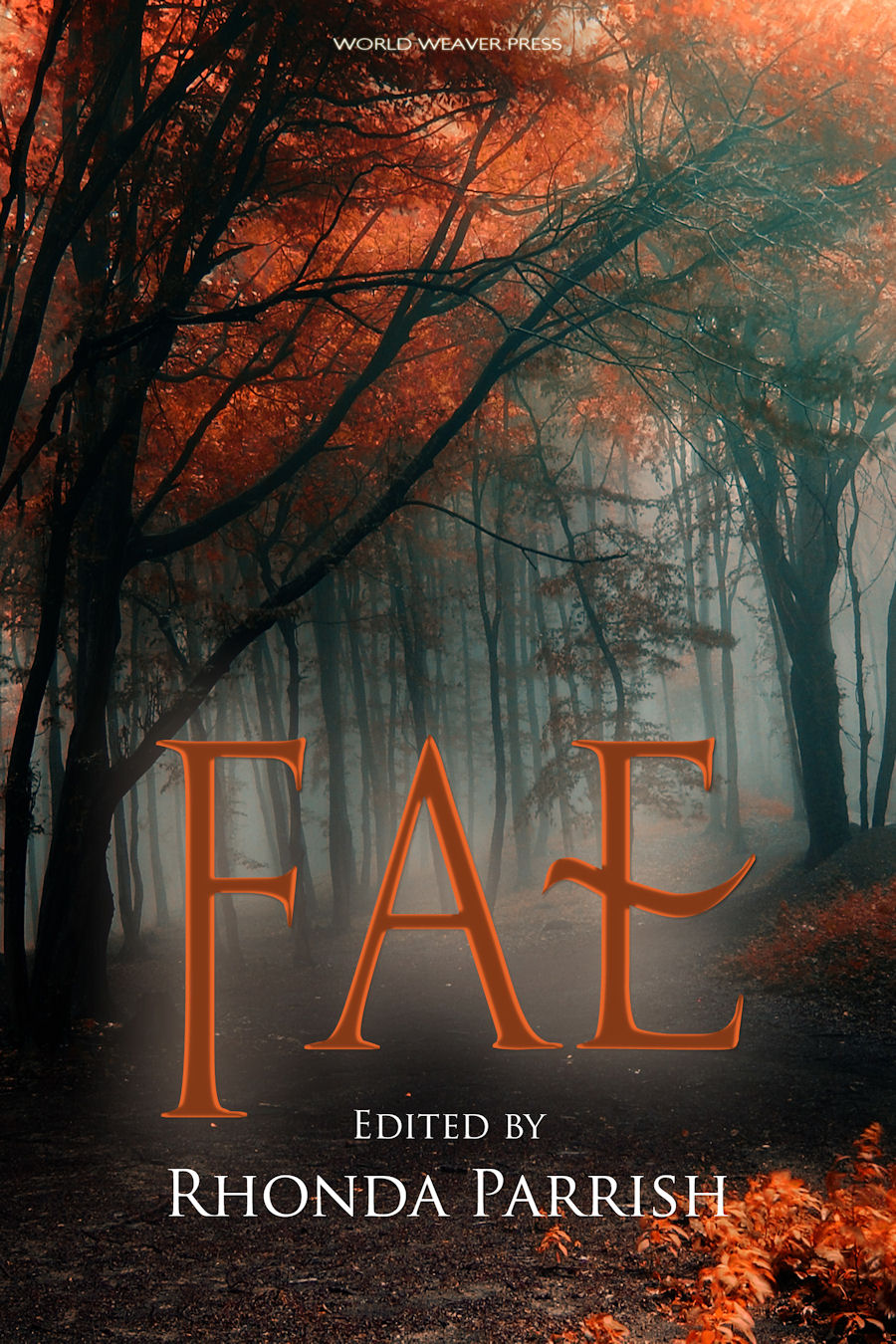
Fairies have been both mischievous and malignant throughout history. They’ve dwelt in forests, collected teeth or crafted shoes. Fae is full of stories that honor that rich history while exploring new and interesting takes on the fair folk from castles to computer technologies and modern midwifing; from the Old World to present day Indianapolis.

Enjoy the familiar feeling of a good old-fashioned fairy tale tinged with urban fantasy, and horror with a fae twist.

Follow the link…step into the fairy ring, if you dare…for a chance to win a copy of Fae.

https://www.goodreads.com/giveaway/show/92441-fae

Edited by Rhonda Parrish

Release date: July 22, 2014 (ebook and paperback)


Standard
books

A is for Apocalypse Cover Reveal

Image

How do you think the world will end? Worth worrying about?

I’ve long said that worry is the misuse of imagination. Here’s what proves me wrong: a collection of stories that turns dread into art, springing from the imaginations of 26 talented writers.

These select writers are being assigned letters of the alphabet, then given complete artistic freedom within a chosen theme. We begin at the beginning…a very good place to start…

 A is for Apocalypse

 A is for Apocalypse contains twenty-six apocalyptic stories written by both well-known and up-and-coming writers. Monsters, meteors, floods, war–the causes of the apocalypses in these tales are as varied as the stories themselves.

But don’t take my word for it. Here’s what others have to say:

“In A is for Apocalypse, the world ends in both fire and ice–and by asteroid, flood, virus, symphony, immortality, the hands of our vampire overlords, and crowdfunding. A stellar group of authors explores over two dozen of the bangs and whispers that might someday take us all out. Often bleak, sometimes hopeful, always thoughtful, if A is for Apocalypse is as prescient as it is entertaining, we’re in for quite a ride.” – Amanda C. Davis, author of The Lair of the Twelve Princesses

“Editor Rhonda Parrish gives us apocalyptic fiction at its finest. There’s not a whimper to be heard amongst these twenty-six End of the World stories. A wonderful collection.” -Deborah Walker, Nature Futures author.

Intrigued? Then get on the mailing list below for info as the launch, the apocalypse, approaches.

Win a free copy! Go to editor Rhonda Parrish’s blog and enter to win an ARC copy of A is for Apocalypse!

A is for Apocalypse
Edited by Rhonda Parrish
Poise and Pen Publishing
ISBN-13: 978-0993699016
ISBN-10: 0993699014
Cover Designed by Jonathan Parrish

Links:

Editor: http://www.rhondaparrish.com
A is for Apocalypse on Goodreads: https://www.goodreads.com/book/show/21944844-a-is-for-apocalypse
A is for Apocalypse Mailing List: http://eepurl.com/TzDN9

Standard
writing

A View From My Window

A View From My Window

On many levels, this is the writing process to me.
It’s bending over a keyboard, lost in your own little world, only to raise your head and see the marvelous things you’re missing.
It’s knowing you’d still choose to return to the places of your imagination even when confronted with such stormy beauty.
It’s a choice, every one of which carries its own rewards and regrets.
It’s knowing there’s an end to every struggle; a light at the end of every tunnel.
Unless it dead ends.
In which case, it wasn’t a tunnel at all. It was a cave.
So you find the safety of concealment, rather than light.
It’s all in how you look at it…

Standard
writing

Down the Rabbit Hole: Embracing the Slow Edit

You did it! You did it!

You pulled the story out of yourself for however many weeks, months, or years it took, and now it stretches before you in its entirety. No longer confined to the imaginative terrain between the walls of your skull; rather, a new-formed entity ready to suck air into its lungs and squall forth a noise that will attract readers to its existence, enticing them to be amazed.

But…no.

Not yet.

You know it needs a little more work.

So you do what you consider ‘editing.’ You kick the typos to the curb and smooth the rough spots so no one will stumble over them. It’s a quick, triumphant jaunt through your creation, reinforcing your belief in its value, fanning to feverish pitch your eager anticipation of a glorious reception by agents.

But just as your mind is ready to break free and begin considering the perfect accompanying query, you realize there’s something else out there. You can hear it approaching, crashing its way through bracken and furze. It’s trudging toward you with the geriatric gait of an arthritic sloth. It’s so close you can feel it sapping all that energy geared toward spewing your manuscript out into agent-world.

It’s here.

It’s the Slow Edit.

You could evade it. It is possible to dodge its plodding presence and speed off into the distance. But the little, niggling voice that never lies tells you if you do, you’ll be speeding off all by your lonesome, ending up in that wasteland where agents never go.

They will know if you haven’t honored the Slow Edit, bending your knee and lowering your head before its ponderous girth.

Just do it.

Put on the brakes.

Settle in for the long haul and…

…before you know it, you’ll be down the rabbit hole.

You will study each word, each sentence. You will debate syntax, placement, order. Your brain will delve into a lifetime’s accumulation of vocabulary, searching for just the right nuance, savor, syllable. It will take multiple sessions to wade through your story, because your brain will be overwhelmed after several hours of unremitting effort. It will offer up optional wording with thesauric profusion, making it impossible to identify the best choice. It will begin to invent words like ‘thesauric.’

You’ll have to take a break, regroup, and tackle the beast when your literary awareness has regained its elasticity. Again. And again.

But in the end you’ll have a tale that doesn’t splay itself out before the reader, offering up its entrails in the hope that someone will find it salvageable. You’ll have a streamlined bullet-to-the-brain, can’t-stop-reading-it work.

Thanks to that ugly, paunchy, unwelcome creature. The Slow Edit.

All done? Feel better? Recognize the worth? Glad you did it?

Good.

Now, go back to the beginning and do it again.

Image

Standard