writing

The Dispersion Factor

dispersal1

No one is an endless fount of pithy comments, scintillating ideas, and inventive ways of expressing them.

It’s a scary thought that we’re not.

I once read a story about a little girl who talked too much. Somewhere along the line she was warned that each of us has a finite number of words to spend. When you reach the end…that’s it. No more. Silence. If she squandered her stock of words, she’d be left to finish her life in wordless isolation.

If that’s true, it becomes imperative that you spend your words wisely. Choose them with care. Focus them toward your goal.

But that’s hard to do in these times when writers are told to keep a public profile. To blog and tweet. To maintain a constant presence via tumblr, facebook, instagram, ask.fm, and a host of other venues.

I understand. I really do. But all the time and energy invested in those adjuncts to a writer’s ‘real’ work have a draining effect. You’re taking a big, ol’ handful of your limited supply of words and tossing them into the wind. Instead of focusing them, aiming them at a target where they might find a lasting home, you’re dispersing them to fall at random. In random patterns. On random ears. Before random eyes.

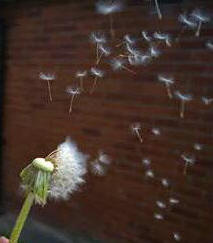
Wasted words? Or are they dispersing like dandelion seeds; their purpose being to find new ground where they can take root?

Hard to say.

Only time will tell if they’re flourishing elsewhere, or simply gone; victims of the wind.

fielddandelions

Standard
writing

Cooking Up a Story

cookingandwritingforblog1

Comparisons between creating on the keyboard, and creating in the kitchen keep popping up.

Unusual, since I’m more likely to use my oven for storage than food prep. Nonetheless…

A good chef will tell you, ‘If you can’t be proud of it, don’t serve it.’  That philosophy has been behind many a late dinner service. But the end result is that all is forgiven once the diner digs into his perfectly produced, delicious repast. He’ll likely deem the meal worth the wait.

The “If it isn’t ready, don’t offer it” philosophy becomes more problematic when applied to writing. Our hungry, hopeful patron may be the editor or publisher, but we have to contend with an intractable extra ingredient.

The deadline.

For most of us who are submitting to calls that will draw hundreds or thousands of entries, we can’t expect to deliver the goods late and justify our tardiness by pointing out how it’s worth the wait. The diner at our table won’t bother sampling. There are no extensions in our kitchen.

Getting a manuscript in on time is a perfectly legitimate, understandable expectation.

But then, you stumble across the call for submissions that stills your world because it seems tailor-made for you. Right up your alley. Posted with your name all over it…

…and it ends in an hour.

So. Do you rush to pound something out with no time for anything other than a quick proofread, and shoot it off to this perfect destination where you just know you belong?

Maybe. It’s a gamble. It’s taking a chance on leaving a bad taste in someone’s mouth. Maybe it would be wiser to let them go dinner-less.

The deadline is an ingredient in the writer’s world that can trump all the other lovely things on the plate. It looms and we are under its gun.

I don’t think chefs suffer that fate quite as stringently. But I could be wrong. After all, my oven is used for storage.

catunder gun

Standard
writing

The Description Duality

frenchgardenhome

I am a bona fide description junkie.

Can’t get enough.

I dive into pages of language paying homage to the precise angles of parquetry; the multi-hues of honeyed sunshine pouring through jewel-toned panes of leaded glass; the wealth of colors and textures in a garden lush with twining, scented blooms.

These things make my toes curl. As long as they’re about environment. As long as they allow my imagination to follow their path and build, layer upon layer, a space of some sort. But pay that much attention to describing characters and you’ve lost me.

It’s the difference between world-building and backstory.

To me it’s the difference between being a participant or an observer.

Once again the concept of show vs. tell rears its quixotic head. Show me a place I can inhabit as a reader and I welcome infinite detail. Use that same level of description to paint a character and I’ll wonder why I should be interested in this passive creature who wavers into view via words instead of his own actions, or feelings, or thoughts.

As a reader, I know what I like; able to scan a dust-cover or blurb and instantly discard or covet.

As a writer, I fall into the trap, carried away on the tide of my own creation.

It’s difficult to read your own work without making the unforgivable mistake of falling in love with it to the extent that you’re blinded to its faults. That’s why everyone tells you to lay the story aside for a few weeks, months, years even. However, if you don’t have that luxury, if a deadline looms…you have to develop the skill of being able to split from your work.

Because the only way your opinion of your own work counts, is if you can confront it as a reader plain and honest.

No patting yourself on the back for a particular turn of phrase.

No thinking cleverness can disguise a lack of heart.

It’s hard. I’m not sure if anyone can do it consistently. But it’s the only way to know if your backstory is as enticing as your world-building. And for those of us who are unusually description-susceptible, it’s a necessary sort of schizophrenia.

Otherwise, we’d sink beneath the surface, sucked into the creation that will never be anything but a playground for one.

lonelyplayground

Standard
writing

Creative Distraction

imagination

There is a fine line between creative distraction and procrastination.

But I know it’s there. I keep stumbling over it.

I love to write. Love it. So what’s up with that sudden need to browse the internet in search of ways to identify which application has hijacked my sound, rendering my laptop as silent as the grave?

With the story or article I’m immersed in open before me, why is it so urgent to investigate if the cat’s dish has enough kibble mounded in it to keep him from launching one of his evil, stank-eyed glares my way?

A beautiful, blank screen and the luxury of time to fill it with words awaits. But I can’t leave that breakfast dish soaking in the sink. Must. Clean. Now.

I love getting lost in my work. Absolutely adore that sensation of surfing waves of vocabulary, feeling as though all those tedious hours of lower education where you were forced to read what teachers, parents and other authorities deemed necessary, have finally been justified. The original purpose shredded and forgotten, but their elements distilled down over time into an internal thesaurus. Each successful excavation of expression slipping into place with a satisfying *click*…

So why all the avoidance?

And then I realized…It’s not procrastination. It’s Creative Distraction.

It’s that tiny break when you’re doing something else and…*click*…your imagination engages. The gears and cogs mesh. The next step in your story emerges from the fog, clear and concise and cogent. You fly back to your laptop, eager to get it all down. Then, as soon as the surge has passed…you stare at the keyboard and realize…

…you just have to organize your closet. Must. Do. Now.

So in the end it’s not a fine line dividing procrastination from Creative Distraction. It’s more of a trip-wire. And you don’t stumble over it. It catches you mid-stride, catapulting you forward.

Right into the next idea.

My plants need watering. Must. Do. Now…

catapulted cat2

Standard
writing

The Relative Levels of Rejection, Part III

rejectstamp

We all know the form rejection is a necessary evil.

It’s impossible for an agent or editor who fields submissions numbering in the hundreds, thousands, hundreds of thousands, to give each one a thoughtful, individual response. Hence, the form.

But the form is a widely varied species that includes some real standouts. One is the It’s-Not-You-It’s-Me rejection. It’s the equivalent of your date saying he had an ‘interesting’ evening. Not a good-night kiss. Rather, the kiss of death. You feel as though you’re being dumped at the front door after a disastrous outing. You appreciate the intention to let you down easy, but the grain of truth that wants to irritate itself into a lump, like sand in an oyster, tells you it’s NOT them. It’s definitely you.

“You create wonderful worlds. Your writing is very atmospheric. But we’re not sure how to market you…”

Yeah, well…I’m pretty sure if the work was really outstanding, they’d find a way to market it. The truth is, it’s not a matter of how to market; it’s a matter of no market. Time to step back and consider some major rewrites.

Still, there are some very nice variations on the It’s-Not-You-It’s-Me that, in my opinion, make them the Miss Popularities of the reject pageant.

“This doesn’t quite fit with us, but you show great potential.”

In other words…back to the drawing board. If this particular submission had real potential, you’d have been asked to rewrite and resubmit. But it’s a nice rejection, and, depending on your frame of mind, you can actually savor it a little, telling yourself you’re an undiscovered talent. You just need some more time to grow.

But my absolute, hands-down, scream-from-the-rooftops fave rejection of all time is the short, sweet “This isn’t right for us, but we’d be interested to see anything else you have.”

That makes it all worthwhile. It’s not acceptance. It’s still a rejection. But it offers that one ingredient without which a writer cannot continue to shout his words into the void in solitary defiance of the odds. It dangles that little thing that has the power to change your view of the world and your place in it. It can make you forge ahead with renewed vigor and determination.

It’s hope.

And it’s beautiful.

happycat

Standard
writing

The Relative Levels of Rejection, Part II

Rejected

We’ve looked at the silence residing at the base of the rejection pyramid in the publishing world. Now let’s drag ourselves up a step and see what other forms of discouragement are waiting to greet submissions.

I used to think the form rejection was a sad comment in and of itself, but then I discovered its extraordinary, toxic cousin. I call it the Drunk-With-Power rejection. Now, I’ve only received one of these, and only heard of a couple of others that found their way to writer-friends, but, boy-howdy, do they stick out. Here…you’ll see what I mean:

“Thank you for thinking of ***** Publishing. I only accept the very best. Lots of writers send me their work, but they have to be really good for me to consider associating my name with them…”

And then:

“I’m sure there are other agents who’ll want this, but I only work with writers I believe will make it big. Really big.”

Now, serious writers do their homework when contacting agents. I make it a point to visit websites, Google client lists, read bios. Your aim is to find the best fit, the most receptive ear for your voice. Failing that, you hope to find the best possible slush pile that will give your work a soft landing when it skitters its anonymous way onto the heap. You also send submissions out in batches, so the details of your research probably don’t reside in your long-term memory. They’re overwritten by subsequent searches.

But I just had to go back and retrace the path that led to the producer of this particular rejection.

As I tapped away on my humble keyboard, expectations blossomed in my mind. Surely this pundit of the publishing industry would have a client list of luminaries that included those worthy of sharing shelf-space with the likes of Hemingway, Steinbeck…Shakespeare, for God’s sake! What I found staring back at me was someone who looked as though she still shopped in the junior section for her wardrobe using Mommy’s credit card.

Someone who had been working as an agent for a grand total of two months.

Someone who I had selected, because she described herself as eager to build a client list of up-and-coming writers who worked with speculative fiction and the darker side of fantasy.

Someone who, today, is no longer with that publishing company. Or any other as far as I know.

Hmmmmm…I wonder why….

So on my ladder, one step up from silence, is the rejection that kicks you to the curb as it strokes the agent’s ego. Drunk-With-Power.

_____________

Next time, the many faces of the form rejection….Ooh, yippee!

rejectkitten2

Standard
writing

The Relative Levels of Rejection, Part I

thumbsdownEvery hopeful writer knows about the special rejection spawned by the literary world.

It’s not a big deal after a while. It’s an undercurrent flowing through your creative life, but one that’s relegated to its own ignominious cesspool. So when I see people tweeting and blogging and otherwise digitally whining about how undeserved or unkind rejection is, I have to stop and analyze my own reaction to its various faces. Bear in mind, this isn’t necessarily reality…only my interpretation of it. And since it makes me happy, I’m loathe to abandon it.

The fact is, rejection occurs on many different levels when it comes from publishers and agents; somewhat akin to Dante’s levels of Hell. Let’s reflect on the path to success by  investigating failure…beginning at the bottom and clawing our way upwards. Today, we visit the dregs, the bottom, the base of the rejection pyramid.

A low point in rejection is silence. No reaction at all. Inside your head a tiny, malevolent voice squeaks, “See? Your work is completely negligible.”

Then it goes for the coup de grace. “YOU’RE completely negligible.”

If you enjoy wallowing in a moment of self-pity, go ahead. Sometimes a little inner angst can be fun. You can use it for the next tortured character you write. But then, kick that little voice in the nuts…realize it has none…and recognize it for what it is: a nothing that could mean anything.

Maybe your submission got lost in the mail, or was eaten by internet gremlins.

Maybe the recipient was sidelined by salmonella, or a vacation, or death. Depending on your proclivity for anger, revenge, or forgiveness, take a moment to imagine whichever fate restores your equanimity.

Or maybe…just maybe…you didn’t follow the submission guidelines.

Or maybe…just maybe…your query was so out there, it’s now making the rounds of the recipient’s water cooler crowd, which today means any of the proliferation of social networks, garnering raised eyebrows and vicariously embarrassed giggles.

Choose one of the above possibilities. Go back. Investigate. Rework. Try again. Because this particular rejection isn’t failure. It’s a wakeup call to develop professional skills like discipline, attention to detail, and persistence.

As someone once said: “There’s a word for writers who don’t give up…PUBLISHED.”

_______

Next time, let’s look at what other delightful genres of rejection await one step up from silence. Oh, goody…

rejectkitten

Standard
writing

Show and Tell

lightning-strikes

It was a critique in the wake of a flash fiction challenge that hit with thunderous force, meaning it was long overdue and something I really needed to hear.

“Show. Don’t tell.”

Of course, I knew this. Had known all along. But for some reason my poor, beleaguered synapses never fully made the connection…never saw the alternate path Show-Don’t-Tell could blaze through my own writing. In truth, I’d thought that’s what I’d been doing already. All that endless backstory, rife with exquisite detail. Surely it was evoking an elaborate picture in the reader’s mind, and isn’t that a worthy goal? Painting with words. Isn’t that what writers do?

Sort of. But, no.

Not by a long shot.

Backstory has its place. So does description. But both definitely fall on the ‘Tell’ side of things. At least the way I was doing it. I hadn’t made the jump. I hadn’t realized that the portraits writers produce owe their power to visceral as opposed to visual detail.

Which gives you more insight into the character? ‘He was a reluctant telepath,’ or ‘Clamping his hands against his skull, he tried to still the buzz-and-mutter in his brain.’

You’re free to disagree, but I’d choose door number two. That’s more the bullet-to-the-brain kind of depiction that might keep editors and agents reading.

There are endless lessons out there; endless options for a writer when it comes to the discovery and creation of individual style. There is no single, ‘right’ way. But the difference between visceral and visual detail can make a sea-change in your work. So I’m making it a personal rule-of-the-road. Putting it right up there with ‘Adverbs pave the road to Hell…’ and ‘Write every day, no matter what.’

As roads go, mine doesn’t have many rules. Too many would be stifling anyway. And it’s okay to break them as long as you know their value in the first place.

Still, the signposts along my route are increasing. They don’t feel restrictive, though.

They feel empowering.

bloglightningend

Standard
writing

The Doggerel Dump

Once upon a time, poetry was, first and foremost, an exercise in rhyming.

No more.

In fact, most literati besmirch the humble rhyme, calling it a ‘hard sell’ if you want to submit such a gasping, grasping creature for publication. And yet, it is still the form of poetry with which most children forge their first connection to the art. So maybe because of that early exposure, the simple rhyme still catches my attention and dictates my own words.

I enjoy the rhythm. The beat. The way it catches the heart and propels the reader forward.

Now, don’t get me wrong. I love the other kind as well. But the small poetry-beast in me that was first enticed forward to sample this marvelous dance of words and ideas and musicality in the form of nursery tales, still pricks its ears forward in the presence of rhyme.

And sometimes…the little beast doesn’t just sample; it stays to consume the entire meal.

Image

Standard