writing

The Description Duality

frenchgardenhome

I am a bona fide description junkie.

Can’t get enough.

I dive into pages of language paying homage to the precise angles of parquetry; the multi-hues of honeyed sunshine pouring through jewel-toned panes of leaded glass; the wealth of colors and textures in a garden lush with twining, scented blooms.

These things make my toes curl. As long as they’re about environment. As long as they allow my imagination to follow their path and build, layer upon layer, a space of some sort. But pay that much attention to describing characters and you’ve lost me.

It’s the difference between world-building and backstory.

To me it’s the difference between being a participant or an observer.

Once again the concept of show vs. tell rears its quixotic head. Show me a place I can inhabit as a reader and I welcome infinite detail. Use that same level of description to paint a character and I’ll wonder why I should be interested in this passive creature who wavers into view via words instead of his own actions, or feelings, or thoughts.

As a reader, I know what I like; able to scan a dust-cover or blurb and instantly discard or covet.

As a writer, I fall into the trap, carried away on the tide of my own creation.

It’s difficult to read your own work without making the unforgivable mistake of falling in love with it to the extent that you’re blinded to its faults. That’s why everyone tells you to lay the story aside for a few weeks, months, years even. However, if you don’t have that luxury, if a deadline looms…you have to develop the skill of being able to split from your work.

Because the only way your opinion of your own work counts, is if you can confront it as a reader plain and honest.

No patting yourself on the back for a particular turn of phrase.

No thinking cleverness can disguise a lack of heart.

It’s hard. I’m not sure if anyone can do it consistently. But it’s the only way to know if your backstory is as enticing as your world-building. And for those of us who are unusually description-susceptible, it’s a necessary sort of schizophrenia.

Otherwise, we’d sink beneath the surface, sucked into the creation that will never be anything but a playground for one.

lonelyplayground

Standard
writing

The Relative Levels of Rejection, Part II

Rejected

We’ve looked at the silence residing at the base of the rejection pyramid in the publishing world. Now let’s drag ourselves up a step and see what other forms of discouragement are waiting to greet submissions.

I used to think the form rejection was a sad comment in and of itself, but then I discovered its extraordinary, toxic cousin. I call it the Drunk-With-Power rejection. Now, I’ve only received one of these, and only heard of a couple of others that found their way to writer-friends, but, boy-howdy, do they stick out. Here…you’ll see what I mean:

“Thank you for thinking of ***** Publishing. I only accept the very best. Lots of writers send me their work, but they have to be really good for me to consider associating my name with them…”

And then:

“I’m sure there are other agents who’ll want this, but I only work with writers I believe will make it big. Really big.”

Now, serious writers do their homework when contacting agents. I make it a point to visit websites, Google client lists, read bios. Your aim is to find the best fit, the most receptive ear for your voice. Failing that, you hope to find the best possible slush pile that will give your work a soft landing when it skitters its anonymous way onto the heap. You also send submissions out in batches, so the details of your research probably don’t reside in your long-term memory. They’re overwritten by subsequent searches.

But I just had to go back and retrace the path that led to the producer of this particular rejection.

As I tapped away on my humble keyboard, expectations blossomed in my mind. Surely this pundit of the publishing industry would have a client list of luminaries that included those worthy of sharing shelf-space with the likes of Hemingway, Steinbeck…Shakespeare, for God’s sake! What I found staring back at me was someone who looked as though she still shopped in the junior section for her wardrobe using Mommy’s credit card.

Someone who had been working as an agent for a grand total of two months.

Someone who I had selected, because she described herself as eager to build a client list of up-and-coming writers who worked with speculative fiction and the darker side of fantasy.

Someone who, today, is no longer with that publishing company. Or any other as far as I know.

Hmmmmm…I wonder why….

So on my ladder, one step up from silence, is the rejection that kicks you to the curb as it strokes the agent’s ego. Drunk-With-Power.

_____________

Next time, the many faces of the form rejection….Ooh, yippee!

rejectkitten2

Standard
writing

Show and Tell

lightning-strikes

It was a critique in the wake of a flash fiction challenge that hit with thunderous force, meaning it was long overdue and something I really needed to hear.

“Show. Don’t tell.”

Of course, I knew this. Had known all along. But for some reason my poor, beleaguered synapses never fully made the connection…never saw the alternate path Show-Don’t-Tell could blaze through my own writing. In truth, I’d thought that’s what I’d been doing already. All that endless backstory, rife with exquisite detail. Surely it was evoking an elaborate picture in the reader’s mind, and isn’t that a worthy goal? Painting with words. Isn’t that what writers do?

Sort of. But, no.

Not by a long shot.

Backstory has its place. So does description. But both definitely fall on the ‘Tell’ side of things. At least the way I was doing it. I hadn’t made the jump. I hadn’t realized that the portraits writers produce owe their power to visceral as opposed to visual detail.

Which gives you more insight into the character? ‘He was a reluctant telepath,’ or ‘Clamping his hands against his skull, he tried to still the buzz-and-mutter in his brain.’

You’re free to disagree, but I’d choose door number two. That’s more the bullet-to-the-brain kind of depiction that might keep editors and agents reading.

There are endless lessons out there; endless options for a writer when it comes to the discovery and creation of individual style. There is no single, ‘right’ way. But the difference between visceral and visual detail can make a sea-change in your work. So I’m making it a personal rule-of-the-road. Putting it right up there with ‘Adverbs pave the road to Hell…’ and ‘Write every day, no matter what.’

As roads go, mine doesn’t have many rules. Too many would be stifling anyway. And it’s okay to break them as long as you know their value in the first place.

Still, the signposts along my route are increasing. They don’t feel restrictive, though.

They feel empowering.

bloglightningend

Standard
books

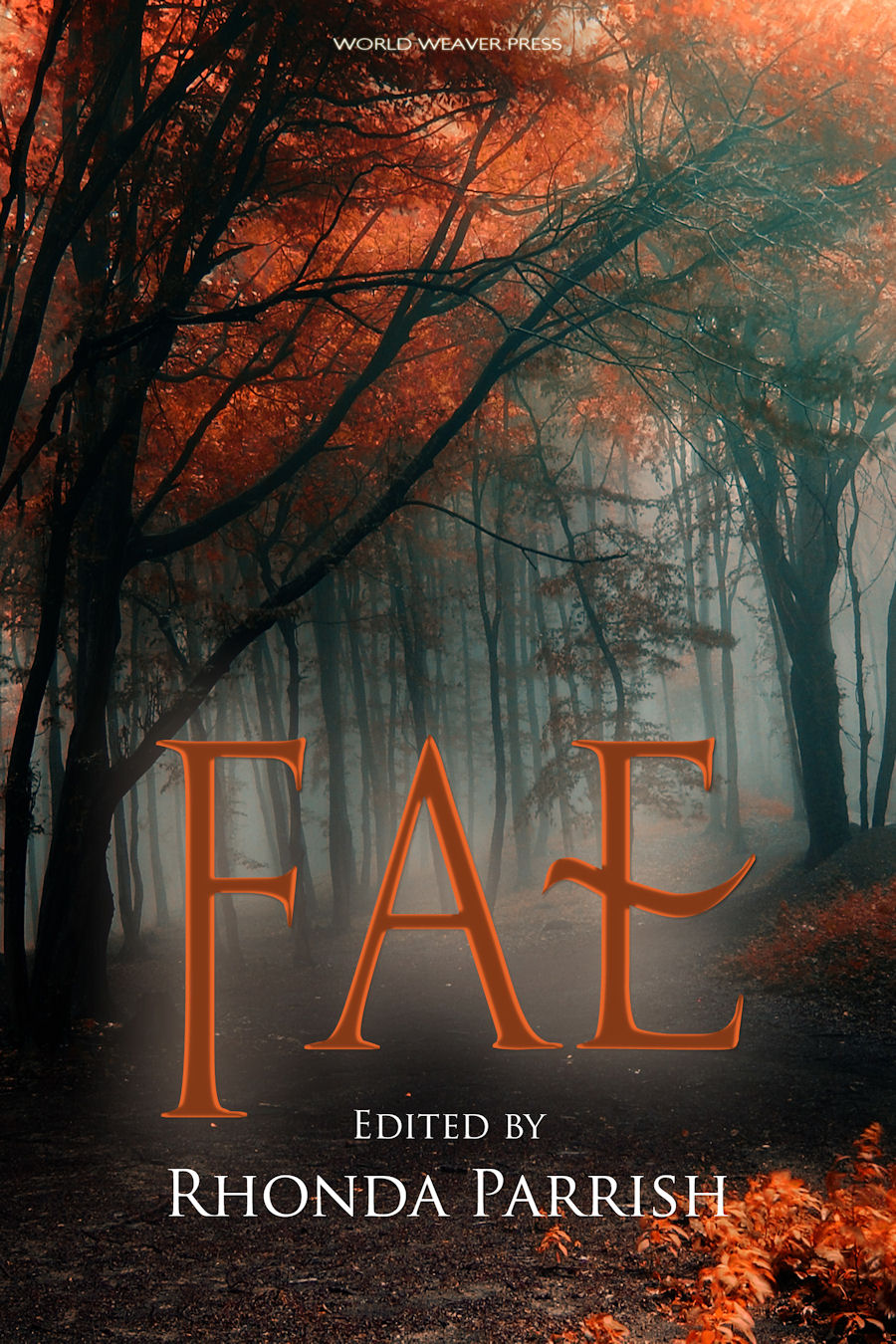
Fae Anthology Cover Reveal

Image

Fairies have been both mischievous and malignant throughout history. They’ve dwelt in forests, collected teeth or crafted shoes. Fae is full of stories that honor that rich history while exploring new and interesting takes on the fair folk from castles to computer technologies and modern midwifing; from the Old World to present day Indianapolis.

Enjoy the familiar feeling of a good old-fashioned fairy tale tinged with urban fantasy, and horror with a fae twist.

Follow the link…step into the fairy ring, if you dare…for a chance to win a copy of Fae.

https://www.goodreads.com/giveaway/show/92441-fae

Edited by Rhonda Parrish

Release date: July 22, 2014 (ebook and paperback)


Standard
books

A is for Apocalypse Cover Reveal

Image

How do you think the world will end? Worth worrying about?

I’ve long said that worry is the misuse of imagination. Here’s what proves me wrong: a collection of stories that turns dread into art, springing from the imaginations of 26 talented writers.

These select writers are being assigned letters of the alphabet, then given complete artistic freedom within a chosen theme. We begin at the beginning…a very good place to start…

 A is for Apocalypse

 A is for Apocalypse contains twenty-six apocalyptic stories written by both well-known and up-and-coming writers. Monsters, meteors, floods, war–the causes of the apocalypses in these tales are as varied as the stories themselves.

But don’t take my word for it. Here’s what others have to say:

“In A is for Apocalypse, the world ends in both fire and ice–and by asteroid, flood, virus, symphony, immortality, the hands of our vampire overlords, and crowdfunding. A stellar group of authors explores over two dozen of the bangs and whispers that might someday take us all out. Often bleak, sometimes hopeful, always thoughtful, if A is for Apocalypse is as prescient as it is entertaining, we’re in for quite a ride.” – Amanda C. Davis, author of The Lair of the Twelve Princesses

“Editor Rhonda Parrish gives us apocalyptic fiction at its finest. There’s not a whimper to be heard amongst these twenty-six End of the World stories. A wonderful collection.” -Deborah Walker, Nature Futures author.

Intrigued? Then get on the mailing list below for info as the launch, the apocalypse, approaches.

Win a free copy! Go to editor Rhonda Parrish’s blog and enter to win an ARC copy of A is for Apocalypse!

A is for Apocalypse
Edited by Rhonda Parrish
Poise and Pen Publishing
ISBN-13: 978-0993699016
ISBN-10: 0993699014
Cover Designed by Jonathan Parrish

Links:

Editor: http://www.rhondaparrish.com
A is for Apocalypse on Goodreads: https://www.goodreads.com/book/show/21944844-a-is-for-apocalypse
A is for Apocalypse Mailing List: http://eepurl.com/TzDN9

Standard